

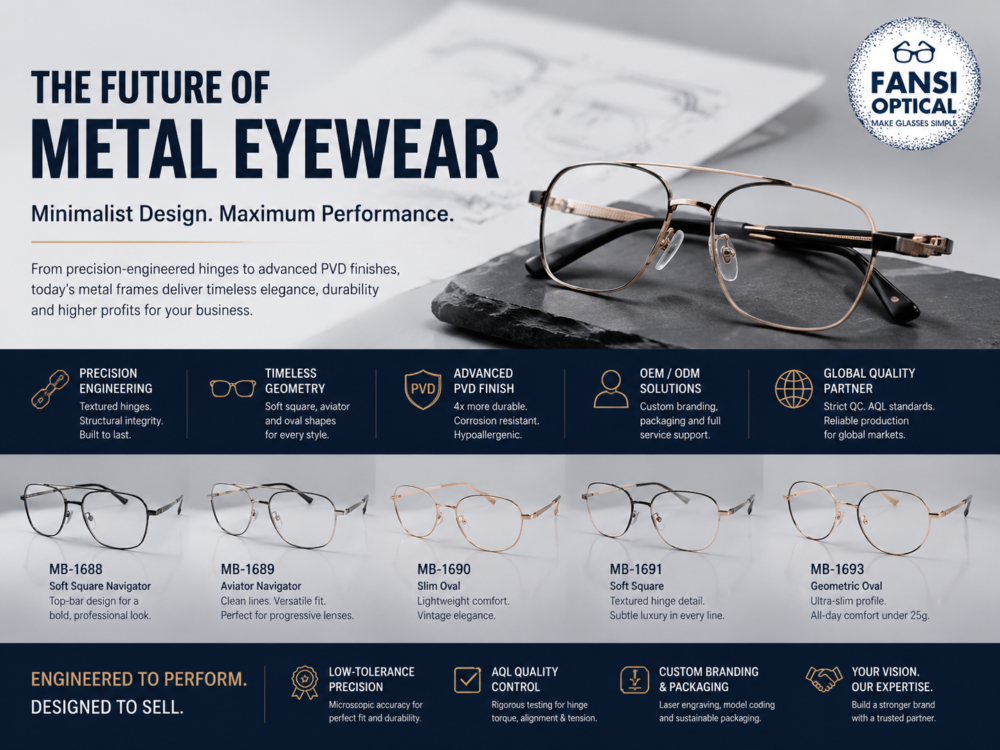
The global eyewear landscape is undergoing a decisive shift. For years, European and North American distributors relied on heavy surface embellishments—decorative temple inlays, logo plaques, and rhinestones—to justify high retail markups. However, international optical buyers, independent brand owners, and procurement directors are pivoting toward a new standard: architectural minimalism, structural precision, and understated material integrity.
For B2B buyers looking to maximize retail margins while lowering warranty defect rates, understanding this operational transition is essential for building a high-converting catalog.
1. The Mechanics of Modern Elegance: Textured Hinge Engineering
In modern metal eyewear design, the hinge is no longer just a functional pivot—it is the signature design element. Modern consumers are rejecting glued-on temple decorations in favor of integrated mechanical craftsmanship.
Precision-engineered textured and ribbed hinges (such as those featured on soft geometric and oval metal frames like the MB-1691 and MB-1692 series) solve two critical challenges for optical brands:
- Structural Integrity: Micro-milled grooves and ribbed accents are cold-forged directly into the metal frame component, eliminating point-of-failure glue joints or loose decorative pins.
- Tactile Sophistication: Subtle, light-refracting knurling along the temple elbow provides an executive, handcrafted feel that commands premium pricing on retail shelves without adding unnecessary weight.
By offering frames that feature tactile structural details rather than applied trims, independent brands can position their collections alongside top-tier luxury labels.
2. Geometry Over Volume: The Rise of Soft Square and Retro Oval Rims
Frame geometry in 2026 is driven by versatility. While oversized acetate once dominated fashion trends, international buyers are seeing a strong surge in demand for lightweight, low-profile metal profiles that bridge the gap between corporate professional wear and everyday streetwear.
Two specific geometric trends are leading current wholesale re-orders:
- Soft Square & Aviator Navigators (e.g., MB-1688, MB-1689): Featuring top-bar bridges and clean eye wires, these shapes offer a flattering structural lift for masculine and unisex collections. Their expanded vertical lens depth makes them ideal candidates for progressive and blue-light-blocking lens fitting.
- Slim Oval & Geometric Rounds (e.g., MB-1690, MB-1693): Delivering a clean vintage aesthetic, ultra-slim oval profiles weighing under 25 grams provide all-day ergonomic comfort.
Offering a balanced mix of structured soft-square and vintage-inspired oval frames ensures your brand covers both classic corporate buyers and style-conscious Gen-Z demographic groups.
3. Advanced PVD Plating & Material Durability
A major pain point for B2B optical buyers is post-sale returns caused by plating flaking, oxidation, and nickel-allergy reactions. High-end retail consumers demand finishes that withstand daily perspiration, cosmetics, and environmental exposure.
Leading manufacturers are replacing traditional wet-electroplating with Physical Vapor Deposition (PVD) coating processes:
- Corrosion Resistance: PVD titanium and alloy coatings form an atomic-level bond with the base metal, offering up to 4x the scratch resistance of conventional lacquer finishes.
- Color Consistency: PVD technology enables richer, highly stable colorways—from deep gunmetal (C2) and satin black (C1) to warm rose gold (C4/C5)—ensuring every batch matches exact Pantone specifications.
- Hypoallergenic Quality: Premium PVD sealing prevents metal-to-skin nickel leaching, meeting EU REACH and US FDA compliance standards out of the box.
4. Strategic OEM/ODM Sourcing: Partnering for Profitability
Selecting the right eyewear manufacturing partner goes beyond unit price. To maintain a competitive edge, brand owners must partner with factories that offer full-stack OEM/ODM customization and strict Quality Control (QC) protocols.
When vetting an optical manufacturer for your next collection, look for key supply-chain capabilities:
- Low-Tolerance Sizing Precision: Lens grooves must be cut to microscopic tolerances to prevent lens popping during prescription fitting.
- AQL Sampling Protocols: Rigorous Acceptance Quality Limit (AQL) testing ensures temple tension, alignment, and hinge torque are verified before global dispatch.
- Private-Label Flexibility: Seamless integration of laser-engraved temple logos, custom inner-temple model coding, and sustainable bespoke packaging.
Future-Proof Your Eyewear Collection
As global eyewear trends move away from transient, flashy embellishments toward timeless structural craftsmanship, aligning your sourcing strategy with high-durability, beautifully engineered metal frames is the key to driving repeat sales and higher customer retention.
Whether you are scaling an established optical chain or launching a private-label collection, prioritizing refined hinge engineering, versatile frame geometry, and advanced PVD finishes will set your brand apart in a competitive marketplace.